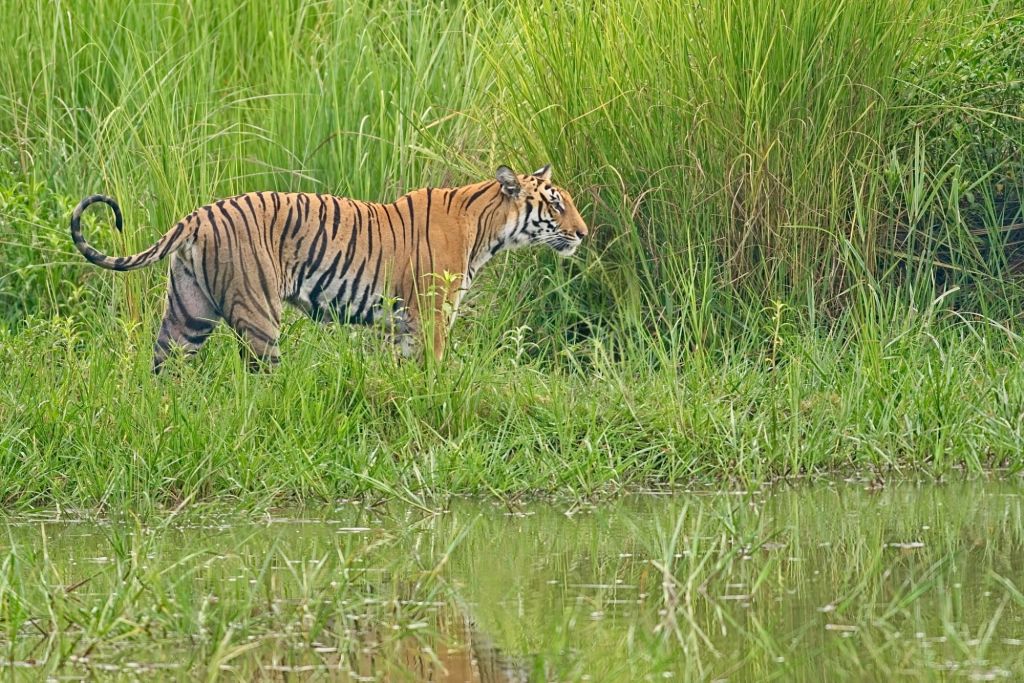
There is a distinct kind of electricity that fills the air just after dawn in the Terai ecosystem. The mist rises slowly off the wetlands, the grass clings to heavy morning dew, and every rustle of the reedbeds demands absolute stillness. On this particular morning, positioned near the iconic Bankey Taal grassland in Dudhwa National Park, patience was rewarded with a quintessential Terai sight: a Royal Bengal Tiger slipping effortlessly through a sea of vibrant green.
Dudhwa is unique. Unlike the dry deciduous forests or rocky terrains of central India, this northern stronghold offers a lush, dramatic backdrop dominated by towering elephant grass (Saccharum ravennae) and dense sal forests. Capturing a predator here isn’t just about finding the animal; it’s about framing it within its true, unapologetic element.
The Shot: Composition and Narrative
The resulting photograph captures a striking juxtaposition of color, texture, and raw wildlife behavior.
The Power of Green: The sheer dominance of the tall, emerald grass fills nearly two-thirds of the frame. It perfectly illustrates how a massive, apex predator can completely vanish within seconds in this terrain. The vividness of the green accentuates the rich, warm orange and stark black stripes of the tiger, making it pop despite being partially enveloped by the environment.
The Curved Tail: A highlight of this frame is the tiger’s tail, curled upward in a distinct ‘S’ shape. In feline body language, a raised, relaxed curl often signals alertness, confidence, or curiosity as it surveys the clearing ahead. It adds a dynamic element of motion to an otherwise still, calculated stride.
A Mirror by the Taal: The lower third of the image transitions into the calm waters of the marshland. The soft, rippled reflection of the tiger’s underbelly and the surrounding reeds provides a beautiful visual anchor, grounding the subject at the crucial intersection where the grassland meets the wetland ecosystem.
Behind the Lens:
Technical Considerations:
Photographing in the Terai presents a unique set of technical challenges, particularly regarding depth of field and texture retention.
Taming the Textures: With countless vertical blades of grass cutting through the background, maintaining a sharp focus on the subject is vital. A wide aperture was used to achieve a smooth, medium blur in the immediate foreground and distant blades, ensuring the busy background didn’t distract from the tiger’s gaze.
Crisp Details: The camera settings were dialed in to ensure that the fine details—the texture of the tiger’s coat, the subtle ripples in the water, and the droplets clinging to the nearby aquatic weeds—remained sharp and defined.
The Spirit of Dudhwa:
Moments like these are reminders of why Dudhwa National Park remains a jewel of the Indo-Nepal borderlands. It is a place where wildlife photography demands a deep appreciation for the landscape. You aren’t just photographing a tiger; you are documenting an ancient relationship between an apex hunter and the flooded grasslands it calls home.
As the tiger moved past the bank, taking deliberate, silent steps toward the cover of the deeper brush, it left behind a perfectly still pool of water and an unforgettable frame for the portfolio.


Leave a Reply